I’ve been wanting to read outside of my comfort zone recently, so I decided to turn back the clock and pick up a Penguin Classic. Where better to start than at the beginning, getting to know the greats? I wanted to make sure I was still enjoying my books, so I opted for stories I knew I’d be reading for pleasure, not to emulate a secondary school English Lit lesson. I would learn something from these books, but that wasn’t my main goal. My goal here is to find new things to love, and to look at familiar things from a new perspective. The pace and writing of classic literature urges you to slow down and really soak in what you’re reading.

Photo by Clem Onojeghuo on Unsplash
I call this series: Rediscovering Classical Literature. I feel that many people view this era of literature as boring or unreadable, written in a voice no longer enjoyable in today’s age. There is a misconception that these stories are not as entertaining as modern books, or that they’re simply existential essays not made for light reading. For the most part, I do agree that it can be slightly harder to read these books, as they tend to use more description and flowery language compared to what we read today. Furthermore, they often use archaic language and uncommon phrases that we may not be accustomed to. But this does not mean you cannot read them at all. It just takes a bit more time, and the result is a wonderful tale, completely original, that still holds up to this day.
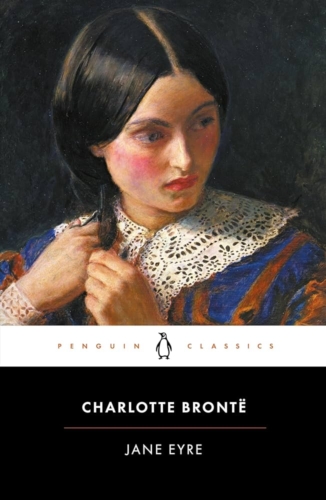
I started this series with Jane Eyre. From each book, I take a theme, a small lesson, or the overarching premise I found most prevalent in the novel. Jane Eyre’s romanticism and its claim to the genre of the ‘love story’ have been debated for many years. Whilst some revere the novel, claiming it is the story of a modern woman stuck in the wrong time, others believe it is a patriarchal fantasy that should never be idolised for its romantic plotline.
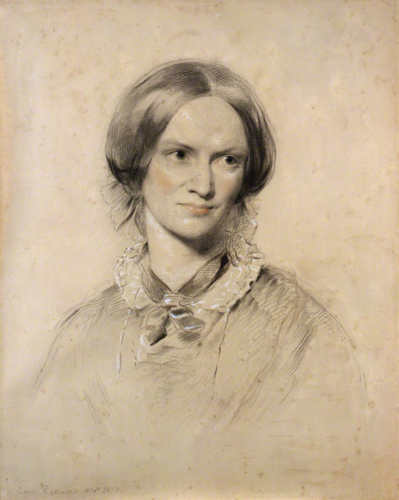
Charlotte Brontë, by George Richmond, 1850. © National Portrait Gallery, London.
I find that, whilst it does have its questionable factors: such as the extensive age gap, the unequal power dynamic between governess and lord, and the nature of Rochester’s dark secret, it still holds up as a thought-provoking novel that deserves all of its accolades. My enjoyment of this book lay with Jane herself.
I thoroughly enjoyed this novel because I find Jane to be one of the most well-written characters I have ever read. Her girlish infatuations, her inquisitorial nature, her self-reflections, and her childish jealousy all paint a wonderfully human picture. She is not a caricature of a teenager; she is written perfectly by Brontë, as if the author were interviewing a living, breathing girl from the 1800s and transcribing everything she says. Jane does not make the best decisions, no, but then who does? So what does she do? She makes her decisions based on what she wants and what she believes is right, and that’s the best anyone can do.
I suppose I read this book at a good time in my life as well. Jane gives up a home and good employment in the search for something new and right for her. I found myself in awe of her bravery, knowing that I too had just made a drastic change in my life. It was already terrifying making such a change in the 21st Century, so I couldn’t even imagine how much courage it took Jane to make such a move back then. Luckily, Jane was privileged in knowing how to read and write, and that helped her to escape.
Big spoiler alert: this book contains a marriage proposal. Many think Jane was wrong for ultimately accepting Rochester’s proposal, and I find myself agreeing that a character as young and sheltered as Jane would have absolutely benefited from more life experience. I suppose it is a lot more palatable if you age Rochester down. Regardless, reading it as objectively as I could, I found that the love story was not what I was reading Jane Eyre for. I knew going into the story that it was classed as a romance, and one cannot deny Charlotte Brontë is a wonderful romance writer. Instead, I found that I really enjoyed experiencing Jane’s growth. She has a great personality, is very grounded and moral, and I found that she is often a point of calm within the stormy plot. Her desire to become important, to travel, and to find a place for herself struck a chord within me, and I found her to be a very intriguing protagonist. Her most compelling feature is her ability to forgive. Reading this story, I felt myself find a sense of peace within the pages. Jane treats forgiveness as something to give out freely.
There is a trend right now of putting yourself first, cutting off all negative influences and choosing yourself. I’d argue that Jane did exactly this. Though not many agree with her decisions, she really did exactly what the wellness girlies argue you should be doing daily: trust yourself, put yourself first, and do what makes you happy rather than what makes the crowd happy. In theory, this isn’t the worst sentiment to have, but in practice I feel some take it too far and are unable to forgive their fellow friends and companions for honest mistakes. Take this with a pinch of salt — not everyone deserves your forgiveness.
She was not always this way, and her growth from holding onto anger and resentment to being able to free herself by forgiving others is a nod to a character she held dear in her early years. That character was her dear friend Helen Burns.
Helen Burns tells Jane, “Life is too short to be spent in nursing animosity and registering wrongs.” Just as we move through life, having known people, remembering the ones we want to and taking parts of them with us that our souls attach to, Jane’s character can be seen taking on the lessons taught by past friends, even foes, and implementing them in her life. When it comes to forgiving Mrs Reed, her neglectful aunt, she happily complies and forgives her fully. In this moment, we see Helen shine through Jane.
Friendships do not need to be for life; some friendships come and go, but the effect they leave on you can last a lifetime. What Jane does is give her forgiveness freely, but she does not allow her journey of growth to be taken away by Mrs Reed. Jane awards Mrs Reed a kindness, and therefore herself a kindness, by freeing them both of the past. In the end, both parties are relieved and can move forward.
There are many that I personally cannot forgive, but I wonder if, as Helen said, I should let go of that animosity and find peace in my own happiness, being able to move forward despite everything. It absolutely shows a level of inner peace and dedication to the self that Charlotte Brontë understood very well. And it would really stick it to those who hurt me if I prospered despite all that had happened, don’t you agree?
What I took from reading Jane Eyre was that if you cannot make a large difference in the world, passing forward a small act of kindness is enough to make the world a better place. Charlotte Brontë has a special power; each of her characters is so well fleshed out that in them all there is something to love, no matter how small. Jane meets many people throughout the novel, and every single one of them teaches her something new. So no, the romance did not stick with me, but rather, it was the thrill of watching Jane find herself.
This book is a true coming-of-age story. Jane finds herself, she finds her family, she finds a way to support herself — and only then is she able to go back and take what she truly loves for herself. I think she is very admirable. No matter whether or not I agree with her decisions, I cannot take away the fact that she trusted herself fully and did what she believed was best for her.
Everyone should read Jane Eyre once in their life. You may not take away what I took from the story, but I am absolutely sure that you would learn something new about yourself.