Earlier this spring, here in the UK, it was World Poetry Day and, in the US and Canada, April marked National Poetry Month. It got me thinking about poetry in general and how it is used — and, more importantly, how poetry is used in times of crisis and turmoil.
Like all forms of literature, poetry can help us make sense of a beautiful, wild, and sometimes violent world. In that sense, it is uniquely human.
But what is poetry?
Poetry is characterised by certain elements such as rhythm, meter, form, imagery, sound, and language. Some poems rhyme, but others do not rhyme at all, such as free verse, which is the form of poetry I mostly write these days.
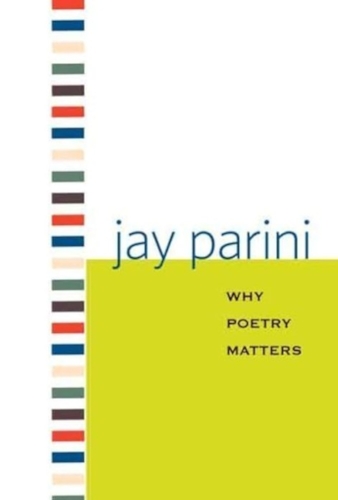
Poetry is a truly ancient genre of creative writing, evoking emotions, painting vivid imagery, and conveying complex ideas. As Jay Parini puts it in his book Why Poetry Matters: “Poets are the wayward ones, the voices of protest against authority, the defenders of powerful feeling over fierce intellection, the abettors of all forms of disgusting and irreverent behaviour.”
These days, it seems poetry has lost its charm. Some people may find the genre intimidating due to a perceived snobbery and sophistication that poetry seems to require to be fully appreciated. Others may find the language of poetry too archaic and inaccessible, which can be true of older poets like Chaucer and Wordsworth.
One of the causes of this disdain, I believe, comes from the horrid GCSE exams, where many of us remember having to dissect a poem to death under stressful exam conditions. Unfortunately, the poems studied perhaps leaned a little too closely into the classics, which can feel so removed from contemporary language that, to the average person, poetry comes across as “up its own ass” — more metaphorical and vaguer than contemporary poems.
However, I believe poetry can be seriously helpful in a world gone mad.
Where reason is strained to the brink of nonexistence and chaos runs rampant, poetry emerges almost as a beacon of hope and resilience.
The distilled language of poetry provides comfort and a profound sense of understanding and community.
Poetry is the mirror to the human soul
At the very heart of it, poetry is essentially about the human experience, condensed into a form that transcends the limitations of prose. It reflects our emotions, thoughts, and moments in time with accuracy and depth that almost everyone can relate to.
Take the first stanza of John Keats’ Ode to a Nightingale:
My heart aches, and a drowsy numbness pains
My sense, as though of hemlock I had drunk,
Or emptied some dull opiate to the drains
One minute past, and Lethe-wards had sunk:
‘Tis not through envy of thy happy lot,
But being too happy in thine happiness,—
That thou, light-winged Dryad of the trees
In some melodious plot
Of beechen green, and shadows numberless,
Singest of summer in full-throated ease.
This poem (which is one of my favourites) is Keats holding up a mirror to show us his depression and envy of how the nightingale he is listening to could be so “happy” while the world is full of death and unhappiness. This is his raw, emotive confession of being painfully happy in hearing the bird.
In terms of how poetry helps in times of crisis, these reflections of ourselves can help people process complex emotions, find solace and comfort in shared experiences, and, most importantly, learn how to navigate uncertainty with a sense of community.
Poetry can be a voice for the voiceless
Poetry has long been used by those marginalised by society as a form of social and political commentary. As Parini notes, “…poetry gives voice to what is not usually said and, in this sense, it becomes ‘political’.” Poetry can be especially powerful in times of societal upheaval, as poets articulate the anger, fear, and hope of collective communities.
A good example of a politically charged poem is Maya Angelou’s Caged Bird, which explores resistance against structures of power in a racist America. A few particularly powerful lines emphasise the contrast between freedom and oppression:
A free bird leaps
on the back of the wind
and floats downstream
till the current ends
and dips his wing
in the orange sun rays
and dares to claim the sky.
But a bird that stalks
down his narrow cage
can seldom see through
his bars of rage
his wings are clipped and
his feet are tied
so he opens his throat to sing.
The caged bird sings
with a fearful trill
of things unknown
but longed for still
and his tune is heard
on the distant hill
for the caged bird
sings of freedom.
In politically charged poems like this, verses challenge the status quo, confront injustice, and advocate for change. They can also give readers a sense of solidarity and empowerment.
Poetry invites empathy
Poetry can help people understand unique perspectives and experiences that differ from our own. It breaks down barriers between individuals, cultures, and societies. In times of crisis, poetry can remind us of our humanity and that we share this earth, which is quite a powerful force.
Poetry heals the soul
Speaking of a powerful force, it can also be said that poetry can be used for healing. As a poet myself, writing a poem can be therapeutic and cathartic, as it lets me articulate feelings that cling to me that aren’t quite resolved yet. It helps me make sense of a messy break-up or express my feelings over this f*cked-up world and why it feels as if everyone is turning a blind eye.
Writing poetry can also establish a sense of community when we share it — just look at the amazing writers here at The Writers Herd. We’re creating a space that brings people together to feel seen, heard, and supported, and I think that’s very cool!
To conclude
Poetry is an art form, and like every art form, it is a form of human expression. In some ways it’s what makes us human: the ability to bring people together, reflect the human experience, and understand each other and different perspectives on life.
In my opinion, poetry is freeing. You can write terrible poetry and still feel the liberating effects of getting your thoughts, your ideas, your feelings down onto the page. It means you’re human and alive!
Coming back to the title of this blog, like any art form, poetry is important in times of turmoil because it can remind us of our humanity and that there’s hope for a brighter future. It can also be used to fight fascism and other forms of oppression by reminding people of our shared community and that there will always be hope. Furthermore, it helps make sense of a senseless world and gives us the courage to change it.
How do you write poetry? Let us know through our social media channels or share your thoughts in the poetry forum on our website.