


“He had been a coward […] or perhaps he simply valued his heart intact. It was only because he knew he would die that he could be so reckless with it.”
Synopsis
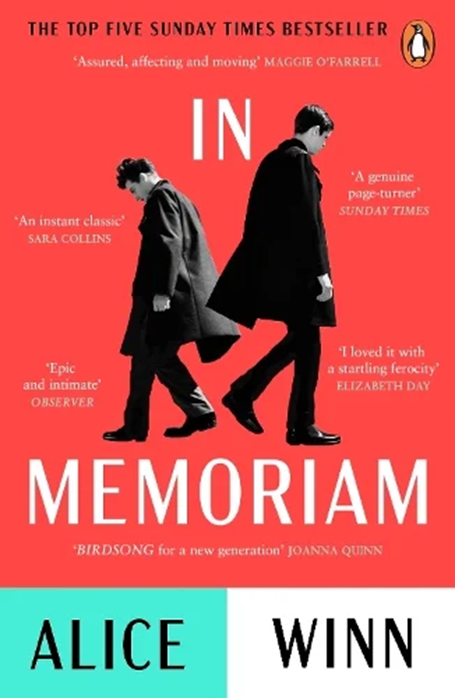
Set in World War One, Ellwood and Gaunt are thrust into the turmoil of war and love at a time when homosexuality is illegal. Not only this, but there is an ongoing war that Gaunt signs himself up to, much to the dismay of his friends, his family, and the most important person in his life — Ellwood.
Confronted by people at school and the White Feather, Ellwood signs himself up to join him. When love (and death) is on the line, will they be able to be honest with each other?
If this poignant First World War love story intrigues you, find it here:
The Voice of War
One of the standout things about Winn’s novel is the brutality of war, and the grimness with which it is described. She truly captures the essence of combat, the dirty underbelly of the politics behind it, and how exhausting it is on both the body and mind. For example, when Ellwood speaks to Hayes about Gaunt’s mental health, Hayes’ response is:
“He just needs rest, that’s all. He’s tired. We’re all tired.”
Tired. A new word ought to be invented, if this was tired.
One of the things I noticed was this fatigued voice throughout scenes of “peace” (where the characters are not currently under attack or attacking, but are still living on an active battlefield), contrasted with the frantic voice of the characters’ desperation when they are fighting. This element truly highlights the exhausting realities of war and the toll it takes on the psyche. This has become one of my favourite aspects of war literature: the deterioration of the self when put through one of the most traumatic life events. This is made worse when military propaganda ties masculinity into being a good soldier…
Military and Masculinity
A deeper element that Winn examines throughout the book is the close link between masculinity and military enrolment propaganda, and how this became an integral part of encouraging men to sign up for war. She also explores how this created a standard by which men could measure themselves. For example, after being caught by Burgoyne (whom they used to pick on at school), Ellwood projects his fear into anger and says: “He’s probably never seen a dead body,” to which Gaunt responds: “Oh, God, Ely, is that how we judge men now?” This exchange highlights Winn’s exploration of masculinity through military culture and propaganda, which Ellwood has clearly absorbed into his psyche.
This is based on the idea that they could not be a man if they did not fight for their king and country. When writing telegrams to inform family members of a soldier’s death, the same message was repeated (with varying wording, but always conveying the same sentiment): that they had fought bravely and died protecting their country. This was the only way in which they could be seen as men, or for their deaths to be considered worthwhile.
Another element of proving masculinity is shown through family relationships, especially Gaunt’s relationship with his father. After speaking to Ellwood about imagining himself as Perseus when he was younger, Ellwood asks: “Do you suppose that Perseus ever forgave Zeus? For not caring about him when it mattered?” to which Gaunt responds: “No.” This emphasises the complicated relationship between him and his father, as well as how male vulnerability (especially in those days) was rarely spoken about, unless it emerged during moments of turmoil in war, where it could only be understood by other soldiers.
Love and Literature
One of the best elements of the story is the romance between Ellwood and Gaunt. It is complicated, steeped in fears of rejection and imprisonment, internalised hatred, and most of all, a fear of losing each other. When placed onto the battlefield, this intensity is exacerbated. When their relationship is threatened to be exposed, this creates tension and fear surrounding homophobic treatment and execution. Being on the battlefield also constructs a constant sense of danger, as at any moment one of them could die, which Winn highlights with brutal honesty.
Her constructed tension is compared to Greek tragedies and myths, elevating the suspense she builds while highlighting the tragic elements of Ellwood and Gaunt’s relationship. This is shown in the quote: “Ellwood smiled and a sudden, dry, bleakness spread over Gaunt’s heart as he thought of Hercules and Hector, and all the heroes in myth who found happiness briefly, only for it to not be the end of the story.” Not only does this elucidate their tragic love story, but it also draws parallels to literature more broadly, reiterating how their shared academic bond is an integral part of their romance.
Ellwood and Gaunt long for each other, lose each other, find each other again, and feel everything when they are together. They often communicate their feelings through poetry, selecting verses they feel are apt for the present moment. Ellwood believes that Gaunt doesn’t pick up on this, but the reader later discovers that he does, as shown in the quote: “Gaunt already knew that Ellwood had loved him. Because of the sonnets.” This shows that their shared love language for each other is deeply understood.
The entire book is wrapped in the tension of whether they will confess, whether they will survive the war, and whether they can ultimately be together. Winn explores this beautifully throughout the novel, while also examining other themes that are deep at the core. Through literature and poetry, she develops a relationship that begins in an academic sphere and brings it onto the battlefield.
Conclusion
This book was hauntingly beautiful. Of course, I won’t spoil the central tension of the plot or reveal anything here, but it was emotionally arresting. I was completely blown away by the beauty of Winn’s writing, and by how vividly she brought both the characters and the war to life. This was a book I loved, even though I felt there was something not there. Despite this, it was a story that I felt had so much to analyse; I just had to sit and highlight favourite lines and dig deeper into it all.
I’m not entirely sure what that is myself, but I didn’t feel the five-star tingles while reading this book. However, does that negate the effect it had on me? Definitely not. Was it beautiful and emotionally impactful, and would I recommend it? Absolutely. Hence, my four-star rating!
Have you read this book?
We would love to hear your thoughts on this book, perhaps you agree with our review, or, disagree?
